
The rise of CPO (co-packaged optics), silicon photonics and high-speed optical engines is reshaping how optical devices are packaged: optical components sit closer to the optical chip, with more channels and higher integration. This trend propagates down the production line, pushing optical coupling machines and end-face inspection equipment from single-channel, manually assisted operation toward multi-channel parallel processing, smart vision and traceable data.
1. What Higher Integration Demands from Coupling and Inspection
In CPO and silicon photonics architectures, the lenses, FAs and waveguide channels inside the optical engine are packed more densely, so alignment deviations are amplified and coupling must handle multiple channels simultaneously at nano-precision. At the same time, multi-channel devices such as AWGs (arrayed waveguide gratings) are more sensitive to end-face and waveguide quality: micrometer-level scratches, chipping or waveguide damage can affect channel consistency. This requires equipment to upgrade in coupling precision, peak-search efficiency and defect-recognition granularity at the same time, rather than optimizing a single step in isolation.
2. Smart Vision and Non-Contact Inspection Become Standard
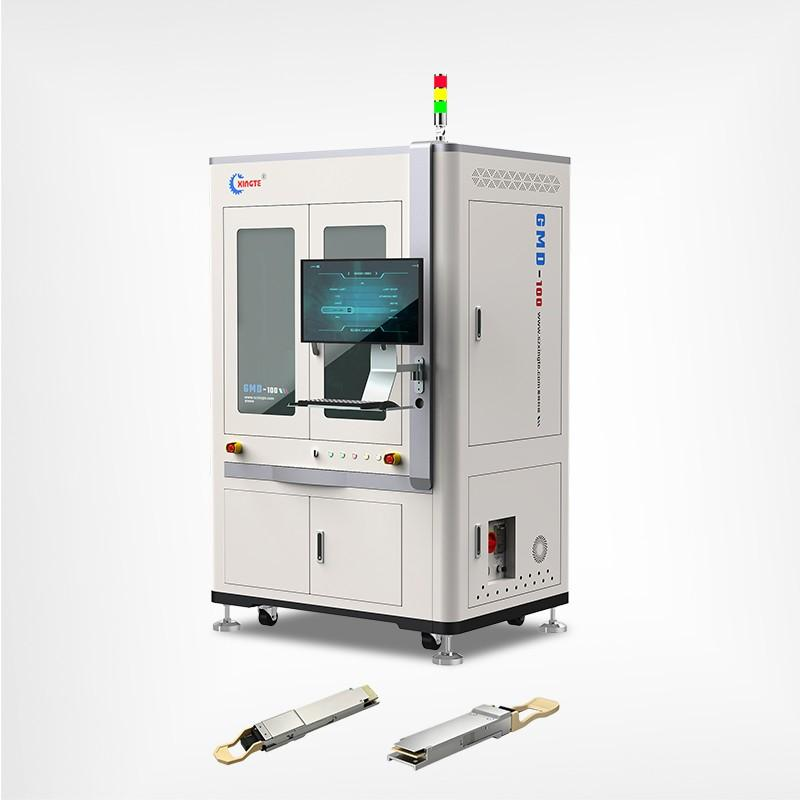
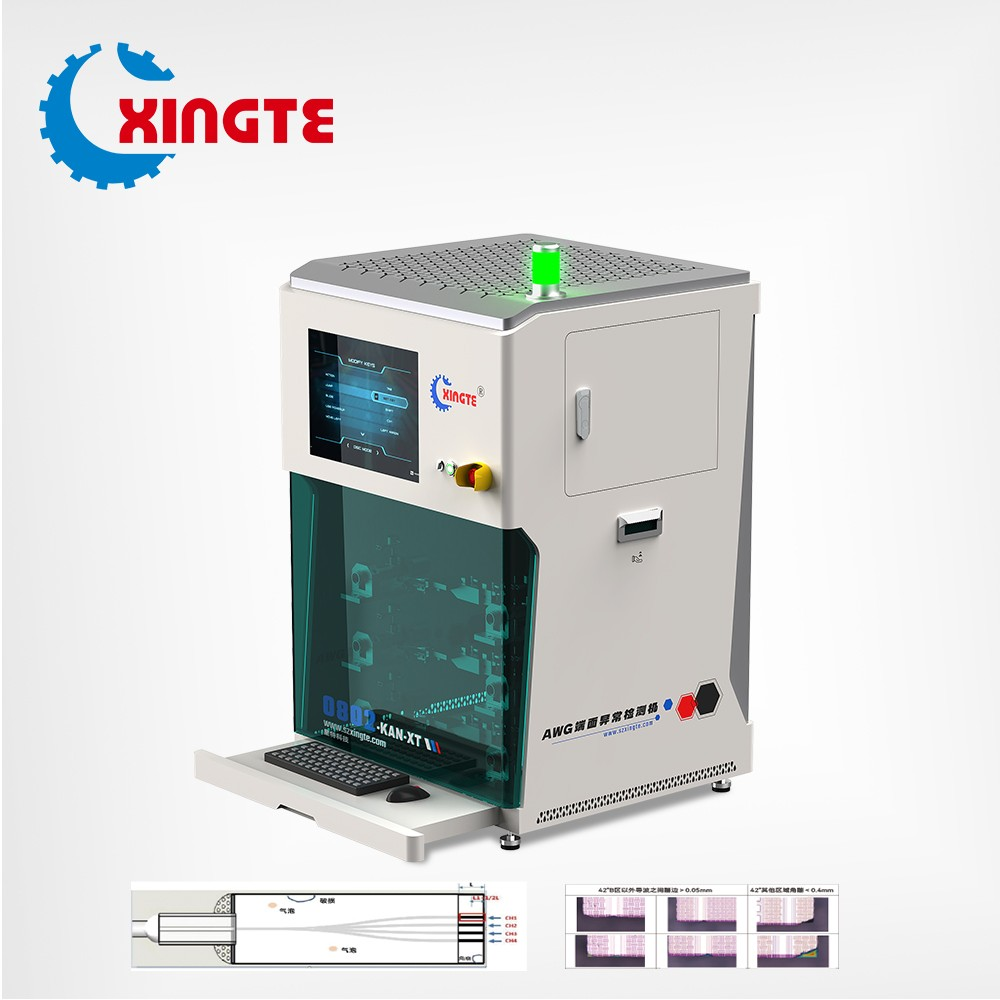
Inspection is shifting from manual judgment toward AI-vision automatic classification. The AWG end-face inspection machine, for example, relies on high-magnification microscopy and AI image algorithms to perform non-contact inspection of AWG chip end faces and waveguide channels, identifying appearance defects such as scratches, chipping, contamination and waveguide damage, while simultaneously measuring key geometric parameters such as channel position and pitch. The non-contact approach avoids secondary device damage and supports continuous batch inspection; AI-based defect classification reduces manual interpretation error, and quick-change tooling adapts to AWG chips of multiple specifications. On the coupling side, an automatic coupling machine uses vision inspection and a self-developed intelligent peak-search algorithm to complete the full process of end-face inspection, peak search, alignment, dispensing and curing.
3. Toward Data Traceability and Line-System Integration
As production scales, the precision of a single machine is no longer the whole story: whether data is traceable and whether the machine can connect to line systems are becoming important selection criteria. Automatic archiving of inspection results, output of inspection reports and integration with the line MES system make the end-face state and judgment result of every device traceable. On the coupling side, freely editable process logic and a customizable software interface lock parameters into the machine to keep optical performance uniform across batch products. The industry trend is objective and gradual: higher integration, multi-channel parallelism, AI vision inspection and MES data integration are together reshaping the capability boundary of optical communication smart equipment. Shenzhen Xingte Technology Co., Ltd. continues to build out optical communication coupling and inspection smart equipment, offering one-stop automation for the mass-production needs of high-speed optical modules and CPO, silicon photonics and AWG devices.