
In recent years, the global motor industry chain has kept adjusting in both regional layout and manufacturing approach. The expansion of downstream demand from new-energy vehicles, robotics, drones and consumer electronics has raised motor manufacturers’ requirements for production efficiency, batch consistency and flexible changeover. At the same time, regionalized supply and local support have become increasingly important. Winding is the key process that forms motor coils, and its equipment directly affects coil quality and delivery. Against this backdrop, the progress made by Chinese precision winding equipment in accuracy, stability and local service has drawn growing attention across the industry.
1. Supply-Chain Regional Adjustment and the Need for Automation Upgrade
In terms of industrial layout, motor manufacturing shows a trend of stronger regional support and closer supply. When selecting winding equipment, customers now look beyond process capability and also value response speed, parts availability and local technical service. In terms of manufacturing methods, manual winding faces pressure from consistency, efficiency and labor cost, while automated winding machines, with CNC trajectory control, multi-axis linkage and closed-loop tension, are gradually becoming the mainstream choice for batch coil production. This shift from manual-based to equipment-based winding has created the external conditions for Chinese winding equipment to grow.
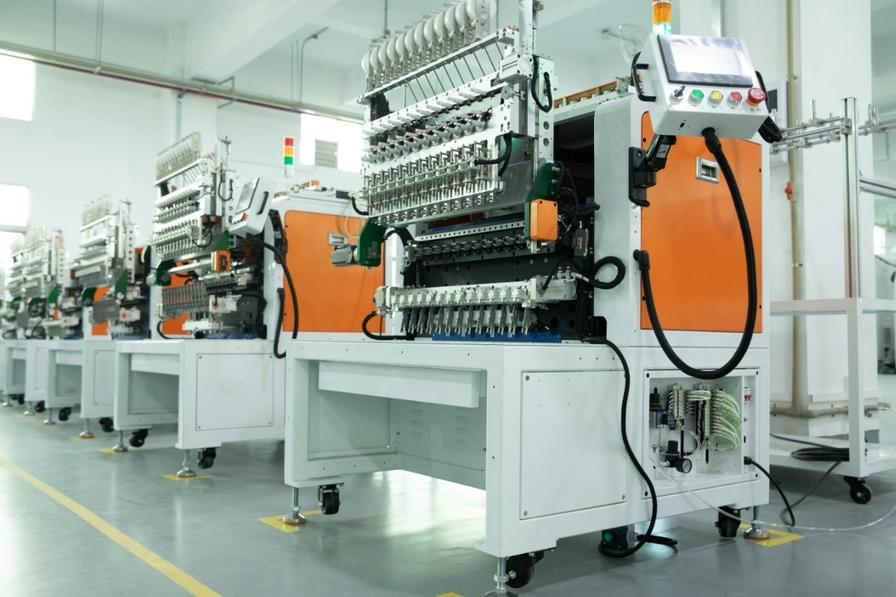
2. The Current State of Chinese Precision Winding Equipment
Through years of accumulation, Chinese precision winding equipment has made observable progress in several areas. In accuracy, nozzle trajectory and core positioning have become more refined, and functions such as segmented wire feeding help keep winding neat and turns uniform. In stability, servo drives and CNC systems have improved multi-axis synchronization. In process integration, the combination of winding, tying, loading and unloading reduces manual handling and intermediate transfer. In cost performance and local service, Chinese manufacturers generally offer more flexible response in delivery lead time, parts supply and on-site commissioning, which better fits customers’ multi-specification, small-batch and customized needs.
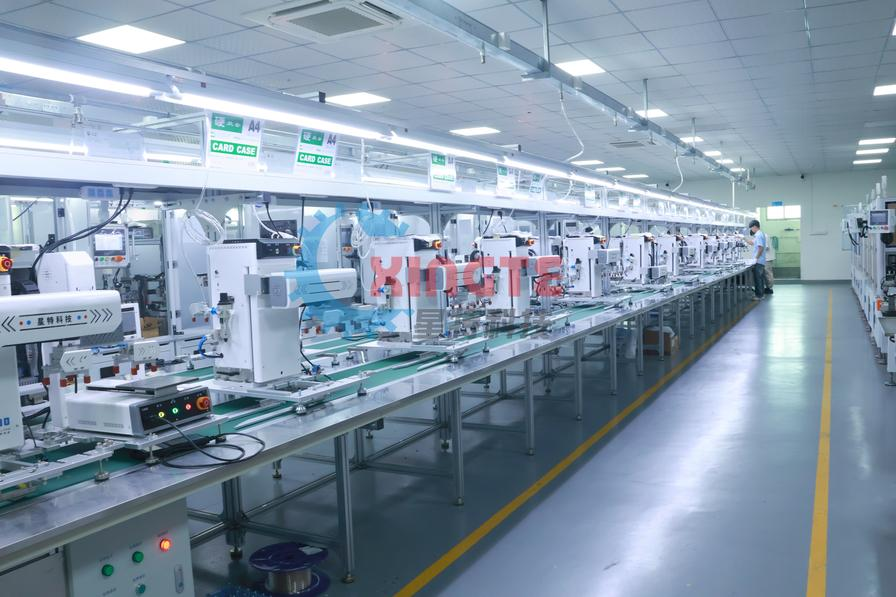
3. Capability Building of a Domestic Equipment Maker
As a domestic winding equipment manufacturer in China, Shenzhen Xingte Technology Co., Ltd. was founded in 2011 and has long been dedicated to the R&D, production, sales and service of high-precision intelligent winding equipment and non-standard automated production lines.
The company operates a 36,000-square-meter modern production base with more than 1,000 employees. Over 360 of them are R&D personnel, accounting for approximately 36% of the total workforce, and the company holds more than 145 authorized patents in total. It is a National High-Tech Enterprise and a national-level key “Little Giant” enterprise. Its marketing and service network covers multiple countries and regions worldwide, with its products applied in sectors including motors, electroacoustics, magnetic components, optics, new energy vehicles, robotics and drones.
4. An Objective Outlook
The regional adjustment of the global motor supply chain and the ongoing shift toward automation continue. With accumulated strengths in accuracy, stability, process integration and local service, Chinese precision winding equipment is gradually gaining recognition from more manufacturing customers. Looking ahead, equipment makers still need to keep investing in long-term reliability, process flexibility and service response, working together with customers to improve motor coil quality and production efficiency.