
Recently, at the 2nd World Humanoid Robot Games, Honor’s humanoid robot “Lightning” delivered spectacular race results: it completed the 100 meter dash in 8.83 seconds, the 400 meter run in 39.45 seconds, and the 1500 meter event in 2 minutes 30 seconds, surpassing human world records across all three events. Most notably, “Lightning” remained steadily upright right after its high speed 100 meter sprint. This fully validates the low latency control and high reliability of the complete robot system under extreme impact, offering tangible evidence of the leap forward progress in domestic humanoid robot technologies.

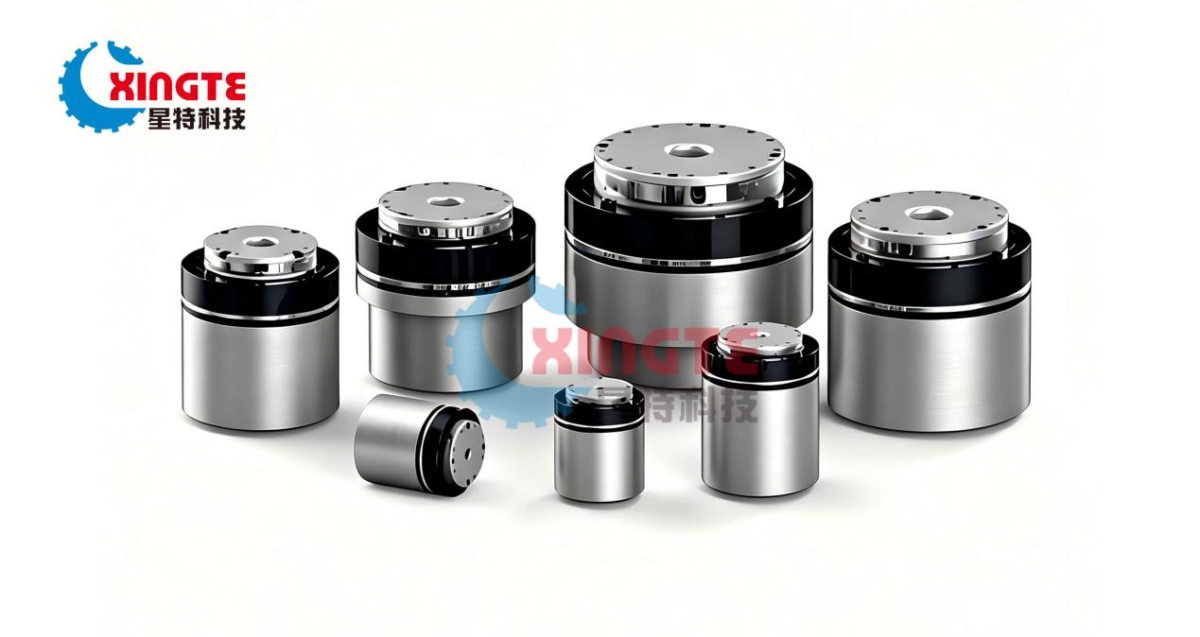
The explosive power, gait stability and emergency stop posture retention demonstrated on the competition field all stem from integrated joint modules. Acting as the muscles and articulations of robots, joint modules deliver power output, response speed and transmission precision — parameters that directly determine whether a robot can run fast, move steadily and stay balanced after sprints. “Lightning’s” successful challenge is a concentrated reflection of breakthroughs achieved in joint module power output and thermal management.
Nevertheless, competition environments differ from real world industry scenarios. Prototypes can perform spectacularly under extreme lab conditions, yet the true test for the industry lies in how to replicate such top tier performance reliably for mass production at the ten thousand unit scale.
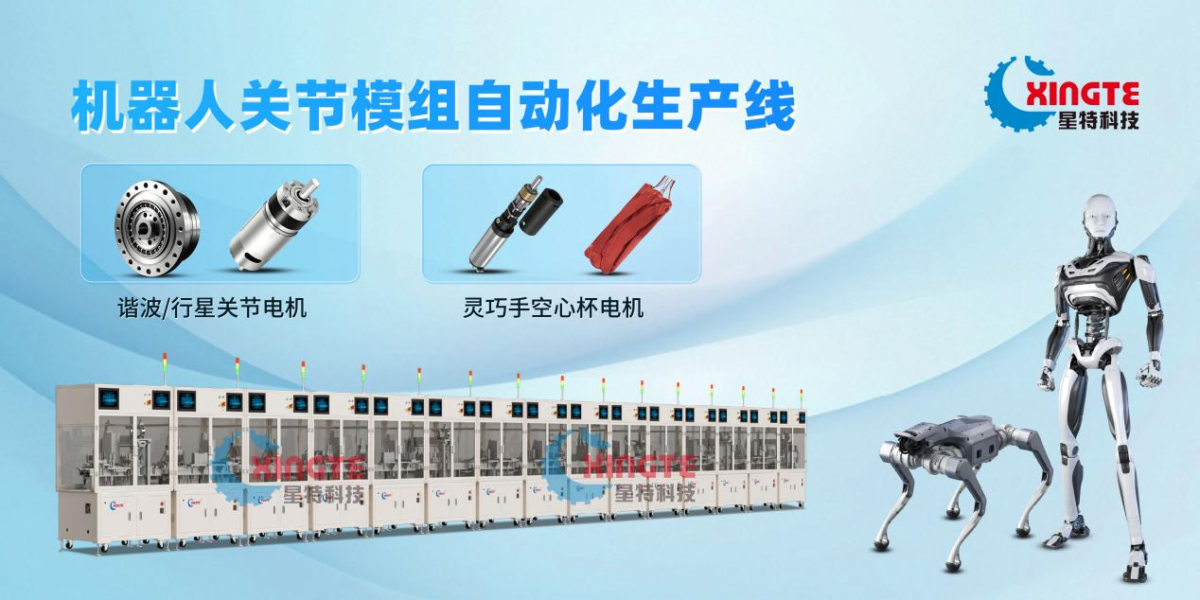
Numerous manufacturers are now producing robot joint modules. Many focus heavily on polishing show case prototypes to draw audiences with impressive lab grade movements, while few genuinely address practical mass production pain points for clients: cost reduction, efficiency improvement, and preventing production lines from becoming one off investments amid frequent model iterations.
Prototypes succeed through R&D; industrial adoption hinges on manufacturing. With monthly model updates and multi variant mixed production becoming standard practice, production line compatibility, cost performance and flexible upgrade capacity become critical factors that decide whether robot manufacturers can sustain competitive advantages in the market.
Xingte Technology provides not merely a proven automatic joint module production line, but also strategic manufacturing planning for customers. Drawing on years of expertise in precision winding and flexible automation, Xingte targets core mass production bottlenecks and launches an integrated flexible automatic line solution for joint modules. It covers the full intelligent manufacturing chain: motor winding, component assembly, dynamic press fitting and inline performance testing.
Fundamental distinctions from conventional solutions are as follows:
- Modular architecture for standardized deployment Built around modular, standardized and precision driven design concepts, the production system converts years accumulated precision assembly know how into digital workflows. It greatly reduces reliance on highly skilled technicians and enables low manpower, stable high volume operations. Real time inspection is embedded in every process station: core indicators such as gear meshing, press fit displacement, torque output and electrical performance are verified on site at each workstation, with defective units automatically intercepted. This resolves the long standing industry problem of “excellent prototypes yet unstable mass output performance”, ensuring highly consistent specifications across all finished modules.
- Flexible adaptability for iterative value appreciation (Xingte’s core competitive moat) The production line is fully compatible with both harmonic and planetary joint modules. It supports flexible mixed production of multiple models and rapid product change overs. There is no need to rebuild production lines for product iterations. Production lines invested in today can evolve alongside new generation products in the years ahead — equipment becomes value appreciating manufacturing assets rather than disposable goods. A full chain data traceability system generates exclusive production records for every unit, supporting both small batch prototype validation and capacity ramp up to tens of thousands of pieces.
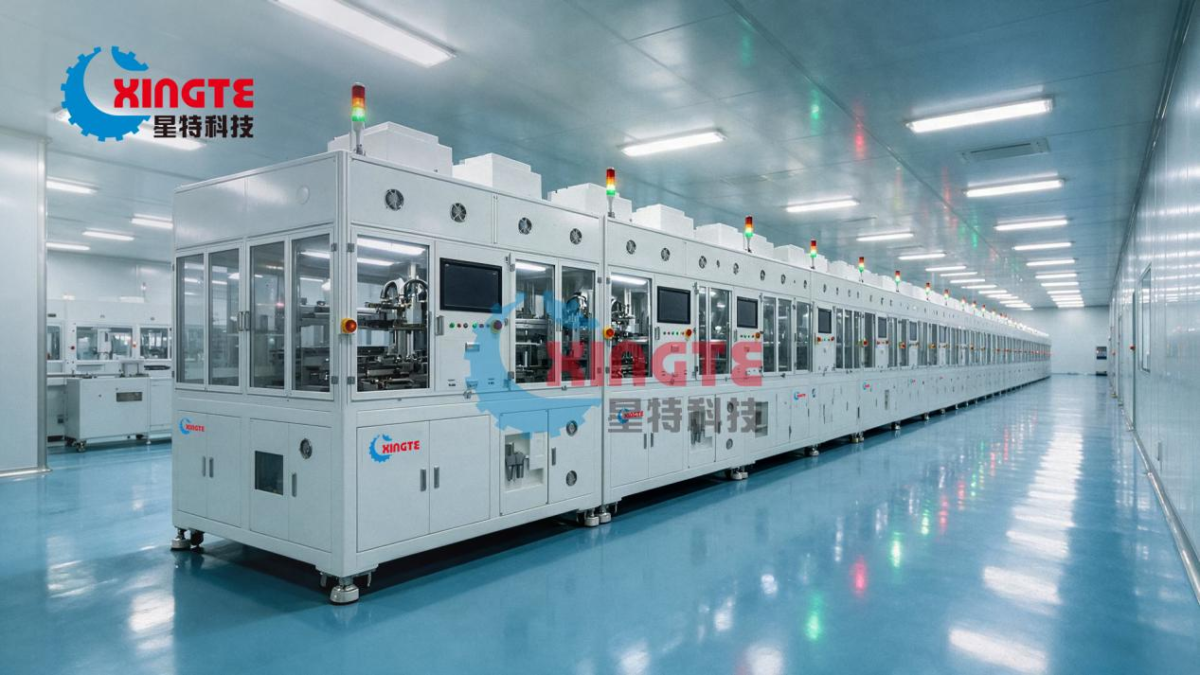
Beyond standalone machinery, Xingte delivers a foundational manufacturing capability platform built on its full portfolio of intelligent production lines: automatic harmonic joint module lines, planetary joint module lines, dexterous hand assembly test lines and humanoid robot body assembly test lines. This creates scalable, iterable and cost optimized manufacturing capacity for customers. It helps enterprises build core manufacturing competitiveness, maintaining cost advantages and stable delivery amid fast changing markets.
The humanoid robot industry has moved past the phase of merely benchmarking prototype performance. Only when more companies achieve self reliance, stable mass production and efficient iteration of joint modules can humanoid robots step out of competition arenas and into real world industrial, civil use and service oriented application scenarios.
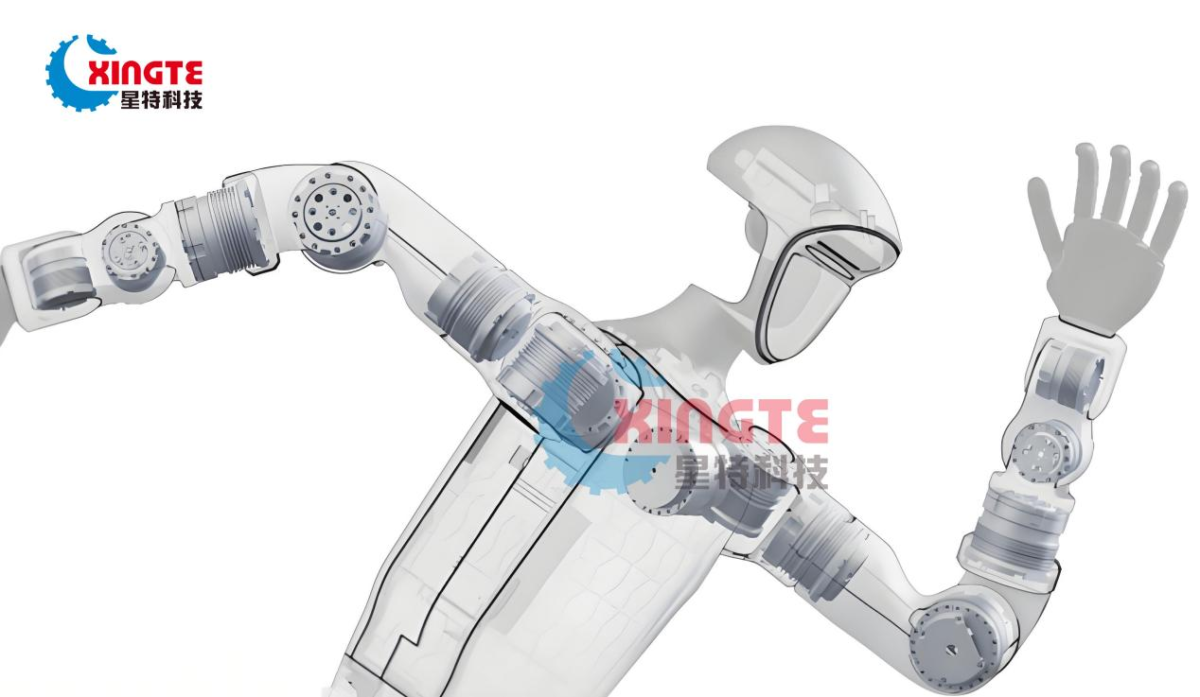
One record breaking “Lightning” robot marks an R&D triumph. Ten thousand stably mass produced and continuously iterated “Lightning” grade robots represent the industry’s coming of age.
Xingte Technology aims to bring the elite robotic capabilities of “stable standing and steady running” out of a handful of top tier laboratories and into thousands of industries. We convert irreplicable manual craftsmanship into programmable micron level mass production precision. We transform production lines from one time capital expenditure into value adding flexible manufacturing strengths. With long term, high efficiency and cost effective precision manufacturing solutions, we consolidate customers’ mass production foundations and empower their long term growth. We help turn eye catching news from competition arenas into everyday companions powered by physical AI technology.