
As AI computing power continues to advance, demand for 400G/800G/1.6T high-speed optical transceivers is climbing steadily, pushing the optical communications industry into a high-volume manufacturing cycle. Optical coupling—the core process in optical transceiver packaging—directly impacts product yield, production efficiency, and manufacturing costs, and ultimately determines overall line quality and output capacity. The coupling equipment sector is now undergoing rapid iteration. As domestic substitution gains momentum, the industry is raising the bar for equipment precision, manufacturing stability, process compatibility, and algorithmic capability. Conventional equipment can no longer keep pace with the demands of large-scale high-speed optical transceiver production.

As 800G and 1.6T transceivers ramp up volume, and as 3.2T, silicon photonics, and co-packaged optics (CPO) technologies continue to evolve, coupling equipment—central to the packaging process—is entering a definitive era of domestic substitution. Coupling relies on nanometer-level optical path alignment, which directly affects insertion loss and transceiver reliability. Accounting for roughly 40% of total line equipment investment, it is the highest-value core equipment in optical communications packaging.
I. Process Iteration Unlocks Growth for Domestic Equipment
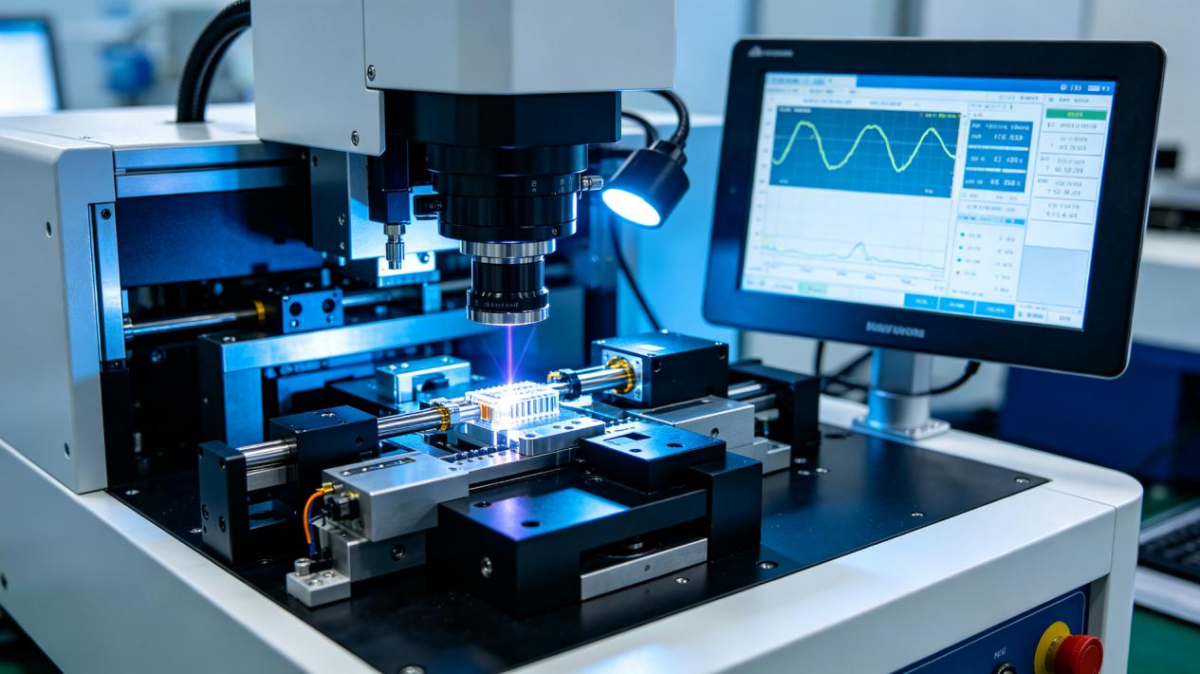
High-speed optical transceiver technology continues to evolve, with the industry migrating from 400G to 800G and 1.6T, while 3.2T enters the technology pipeline and silicon photonics adoption accelerates. Industry process standards have shifted dramatically: 400G requires coupling precision of 0.1μm, while 1.6T and silicon photonics modules demand precision down to 50nm. Traditional manual and semi-automatic equipment can no longer meet volume manufacturing requirements—high-precision fully automatic coupling equipment has become a production-line necessity.
Downstream manufacturers continue to expand capacity, with capital expenditure shifting toward high-value equipment such as coupling and testing systems, driving steady growth in demand for premium coupling equipment. Imported equipment, however, suffers from long lead times, high costs, and slow after-sales response, making it difficult to match the fast-paced domestic production rhythm—and creating substantial room for domestic alternatives.
II. Industry Reshaping: Domestic Equipment Accelerates Breakthroughs
Historically, the high-end coupling equipment market was dominated by overseas products, with low domestic penetration at the premium end. While overseas manufacturers boast deep technical expertise, they commonly face long delivery cycles and limited adaptability, making it hard to keep up with the rapid iteration of domestic production.
Domestic coupling technology has achieved continuous breakthroughs. Equipment can now achieve 50nm high-precision alignment, support full-rate production from 800G to 3.2T, and handle both active coupling and silicon photonics passive coupling processes—gradually being deployed on leading manufacturers’ production lines.
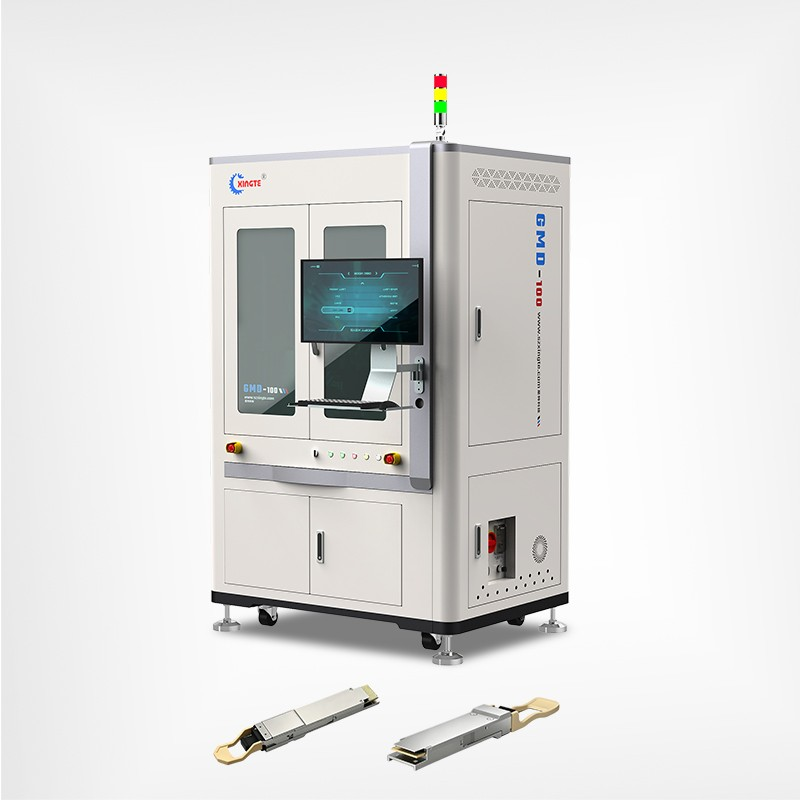
Addressing industry pain points in volume manufacturing, Xingte Technology has launched an all-new dual-Lens automatic coupling machine, delivering a high-precision, highly adaptable domestic coupling solution. The equipment supports both dual-Lens and dual-FA mainstream coupling processes, accommodates COB, BOX, and optical engine packaging formats, and covers full-rate optical transceiver production from 400G to 1.6T. Backed by nanometer-level precision hardware and self-developed coupling algorithms, it effectively resolves conventional manufacturing bottlenecks, scales to high-speed module production, and accelerates the domestic deployment of premium coupling equipment.
III. Core Drivers of Domestic Substitution
Amid the broader trend toward supply chain autonomy, the localization of packaging equipment has become an industry priority, providing domestic manufacturers with ample opportunities for validation and iteration to continuously optimize production performance. Compared with imported equipment, domestic alternatives offer flexible delivery, controllable costs, and the agility to support rapid capacity expansion—helping manufacturers reduce costs and improve efficiency. Moreover, by staying close to downstream markets, domestic equipment makers can quickly adapt to new process iterations such as silicon photonics and high-speed COB, creating a virtuous cycle of industry alignment.
IV. Current Industry Challenges
In cutting-edge high-end scenarios such as 3.2T and CPO, overseas equipment still retains advantages in low-level control and algorithmic expertise, while domestic high-end equipment remains in an ongoing phase of optimization and validation. Additionally, the localization of certain core components is still in progress, and a shortage of skilled commissioning technicians has, to some extent, slowed the large-scale rollout of premium domestic equipment.
V. Industry Outlook

The continued expansion of the high-speed optical transceiver market is driving steady growth in demand for premium coupling equipment. In the near term, large-scale capacity expansion for 800G and 1.6T will continue to release demand for equipment upgrades and new installations. In the longer term, the commercialization of silicon photonics and CPO will further elevate the process value and application scope of coupling equipment.
Domestic coupling equipment is currently at a critical stage of upgrading and breakthrough, with substitution continuously taking hold in mainstream high-speed scenarios. As hardware and algorithms continue to mature, domestic penetration in the high-end segment will rise steadily. Going forward, Xingte Technology will remain deeply committed to precision optical communications packaging, continuously refining equipment precision, stability, and process compatibility, and delivering proven domestic volume-manufacturing solutions to empower high-quality development across the optical communications industry.
Free Consultation for Custom Volume Manufacturing Solutions
For manufacturers with distinct production requirements, Xingte Technology offers one-on-one process assessments and tailored volume manufacturing solutions, helping enterprises optimize processes, improve yield, and control production costs.