
A winding machine is the precision equipment that forms motor coils. Its laying accuracy, stable tension and mechanical condition directly determine coil quality and production continuity. In multi-variety, batch production environments, a single unplanned stop or a batch of defects often traces back to details overlooked in routine maintenance. Establishing a disciplined, sustainable daily maintenance routine helps reduce downtime losses, stabilize batch consistency and extend the effective service life of the equipment.
1. Daily Cleaning and Dust Removal
Copper chips, enamel dust and environmental dust are generated during production and can collect around the tensioner, wire guide, guide rails and sensors. Over time this causes sluggish movement, faulty detection or scratches on the wire surface. Before startup and at each shift change, clean the winding area, laying mechanism and wire guide with dry, soft tools. Avoid blowing precision optical or electrical parts with an air gun, so that debris is not blown into the mechanism.
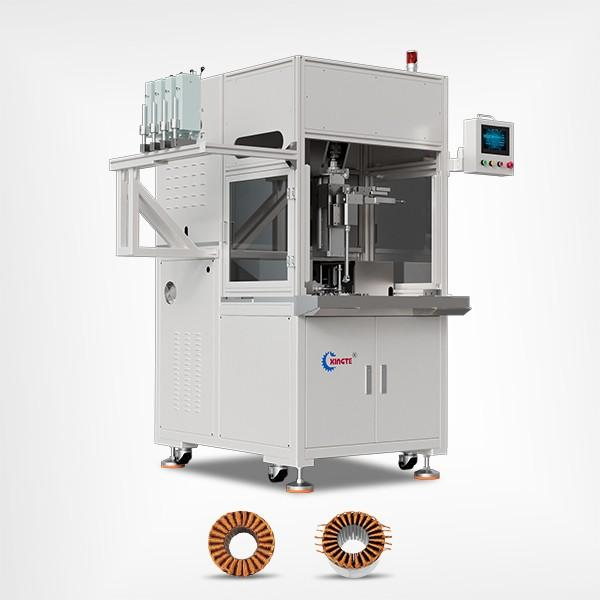
2. Tensioner and Wire Guide Inspection and Lubrication
The tensioner and wire guide are the parts in direct contact with the enameled wire, and their condition directly affects laying tension and wire-surface quality. Check regularly whether the tensioner rotates smoothly and evenly, and inspect the inner wall and outlet of the wire guide for wear or scoring. Lubricate moving parts only as specified in the equipment manual, using a small amount of the designated lubricant and keeping oil off the wire. Tension fluctuation or a worn wire guide often causes slack laying, uneven turns or even wire breakage, so these are key items in routine inspection.
3. Laying Mechanism and Drive Parts
Drive components such as the laying guide rails, ball screw, timing belt and transmission shafts should be kept clean, moderately lubricated and checked for loose connections and correct belt tension. Insufficient lubrication increases wear and operating noise, while excess lubrication attracts dust and contaminates the wire. Based on running conditions, set a maintenance interval so the laying mechanism operates smoothly, providing a mechanical basis for neat winding.
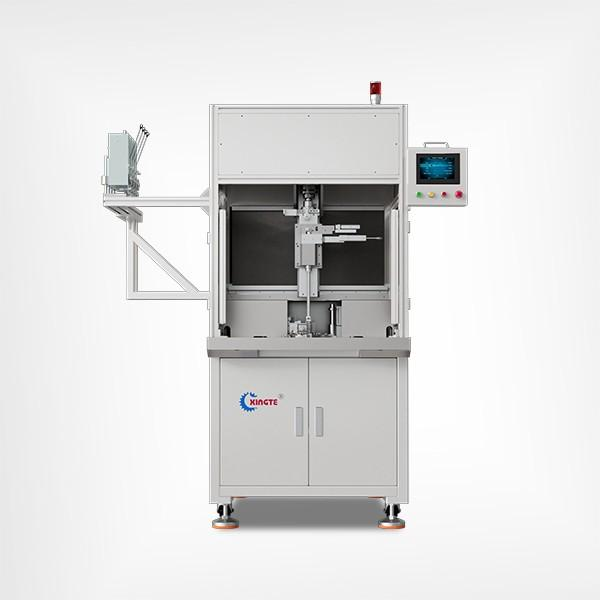
4. Periodic Calibration of Positioning and Trajectory
After long periods of operation, mechanical clearance and positioning may drift, affecting core positioning accuracy and nozzle trajectory consistency. In line with the production plan, periodically re-calibrate core positioning, nozzle origin and winding trajectory, and run a first-article check after changeover or batch change. This keeps winding position and turn layout consistent across batches and reduces dimensional deviation and rework caused by positioning drift.
5. Wear-Parts Inspection and Replacement
Wire guides, guide rollers, tension discs, belts and filter consumables are wear parts with a normal service life. Keep an inspection and replacement record, and replace them in time when wear, scoring or end-of-life is found, so a single small component failure does not lead to a whole batch of defective coils. Using spare parts matched to the equipment specification helps preserve its original winding accuracy and stability.
6. Standard Operation and Running Records
Operators should thread, load, start and stop the machine according to procedure, avoiding misoperation that could damage the wire guide and laying mechanism. Record the daily running status, alarm messages and any abnormal events to support later maintenance and troubleshooting. Standard operating habits and complete running records are the basis for shifting maintenance from reactive repair to prevention.
7. Troubleshooting on Abnormal Stops
When the machine stops abnormally, power it off first and then troubleshoot from simple to complex: check for broken wire, abnormal tension and wire jamming first, then confirm whether positioning and trajectory have shifted and whether wear parts are worn. After clearing the fault and confirming with a trial winding, resume normal production, so that running with a fault does not cause wider quality and equipment damage.
Conclusion
Disciplined, ongoing daily maintenance is the foundational work for reducing unplanned downtime losses and stabilizing batch consistency of winding machines. Shenzhen Xingte Technology Co., Ltd. has long focused on the research, production and service of high-precision winding equipment, and can provide customers with corresponding technical support and service response in equipment use, maintenance and after-sales service.