
As data-center bandwidth demand rises, high-speed optical modules are evolving from 400G and 800G toward 1.6T, while new package forms such as co-packaged optics (CPO), silicon photonics and high-speed optical engines are moving into mass production. Higher line rates and denser packaging raise the bar for the optical coupling process inside the module, making automatic coupling machines a key piece of equipment for production efficiency and yield.
1. What 1.6T Brings to the Coupling Process
A line-rate upgrade is not only about faster electrical signals; it also tightens requirements on alignment accuracy, peak-search speed and multi-channel consistency. As channel counts grow and pitch shrinks, deviations between the lens, fiber array (FA) and optical chip are amplified, and even micrometer-level alignment drift can affect coupling efficiency and return loss. At the same time, production takt requires the machine to complete peak search and alignment in less time, while keeping optical performance uniform across long continuous runs. The parallel use of COB, BOX, optical engine, CPO and silicon photonics packages also demands flexible changeover capability.
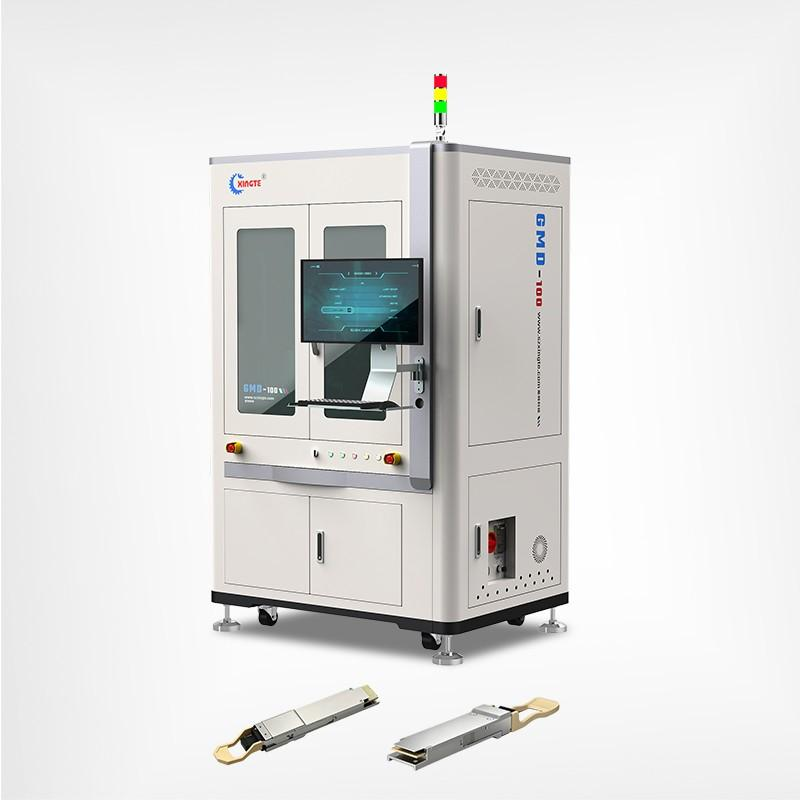
2. How Automatic Coupling Machines Respond
To meet this trend, integrated automatic coupling machines bring end-face inspection, optical-path peak search, precision alignment, dispensing and curing into one platform. The Xingte dual-lens automatic coupling machine uses a ±50nm nano-precision motion platform, paired with a high-performance vision inspection system and a self-developed intelligent peak-search coupling algorithm. It performs end-face inspection at the loading stage, then automatically completes peak search, alignment, dispensing and curing, fully replacing manual coupling and eliminating operator-induced deviation. The machine delivers stable coupling yield above 97% and equipment uptime above 93%.
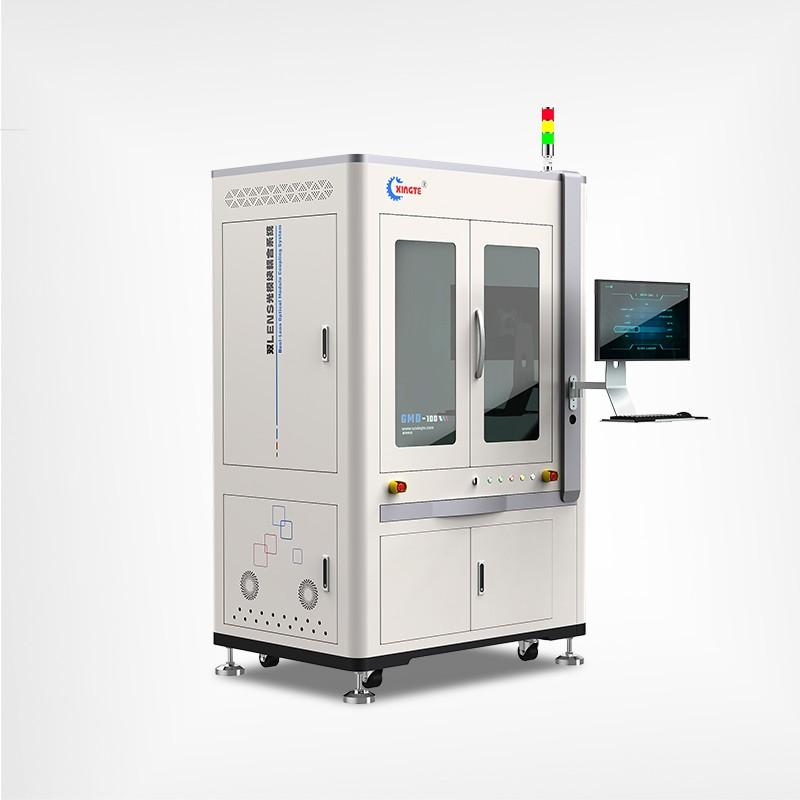
3. Multi-Process Compatibility and Closed-Loop Control
In the 1.6T era, technology routes are diverse, and the equipment must support both dual-lens and dual-FA mainstream coupling processes while adapting to COB, BOX, optical engine, CPO and silicon photonics packages. Through closed-loop control of key optical metrics such as adhesive thickness, flatness and return loss, the machine maintains consistency in batch production and reduces the defect rate. Freely editable coupling process logic and a customizable software interface shorten setup and import time, supporting both R&D sampling and large-volume continuous production. Shenzhen Xingte Technology Co., Ltd. has long focused on optical communication smart equipment, offering one-stop automation from end-face inspection to coupling and curing, helping high-speed optical module makers move smoothly toward 1.6T mass production.