
As optical communication technology evolves toward 400G, 800G and even 1.6T, optical chips have more channels and smaller spot sizes, and the alignment tolerance requirement for coupling has entered the sub-micron or even nanometer level. Against this process background, traditional manual coupling can no longer meet the mass-production requirements of high-end optical modules, and adopting automatic coupling equipment is becoming the inevitable choice for the industry. This article analyzes the key reasons from three dimensions.
1. Accuracy bottleneck: manual coupling struggles to meet the standard. The optical path alignment accuracy requirement for high-speed optical modules is extremely high. Manual coupling relies entirely on operator experience and skill, making it difficult to stably achieve sub-micron or even nanometer alignment, resulting in large coupling loss fluctuation and poor product consistency, so the yield of high-end optical modules is hard to improve. In contrast, automatic coupling equipment achieves stable nanometer-level alignment through coordinated precision motion control and vision systems, ensuring highly consistent optical performance for every module.
2. Efficiency bottleneck: manual coupling cannot match scale production. As optical modules move toward multiple channels, the number of alignment points to be coupled per product increases exponentially. Manual coupling is not only time-consuming but also makes debugging increasingly difficult, and capacity cannot match large-scale order demand. Automatic coupling equipment supports multi-channel parallel operation and long, uninterrupted running, and single-station capacity can reach several times that of manual methods, significantly releasing capacity bottlenecks.
3. Personnel bottleneck: labor cost and production-line stability are hard to balance. Trained optical module coupling operators require a long training cycle and high labor costs, and staff turnover directly affects production-line stability and product quality. Automatic coupling equipment, through standardized and programmatic operations, greatly reduces reliance on labor, lowering labor and training costs while ensuring long-term stable line operation.
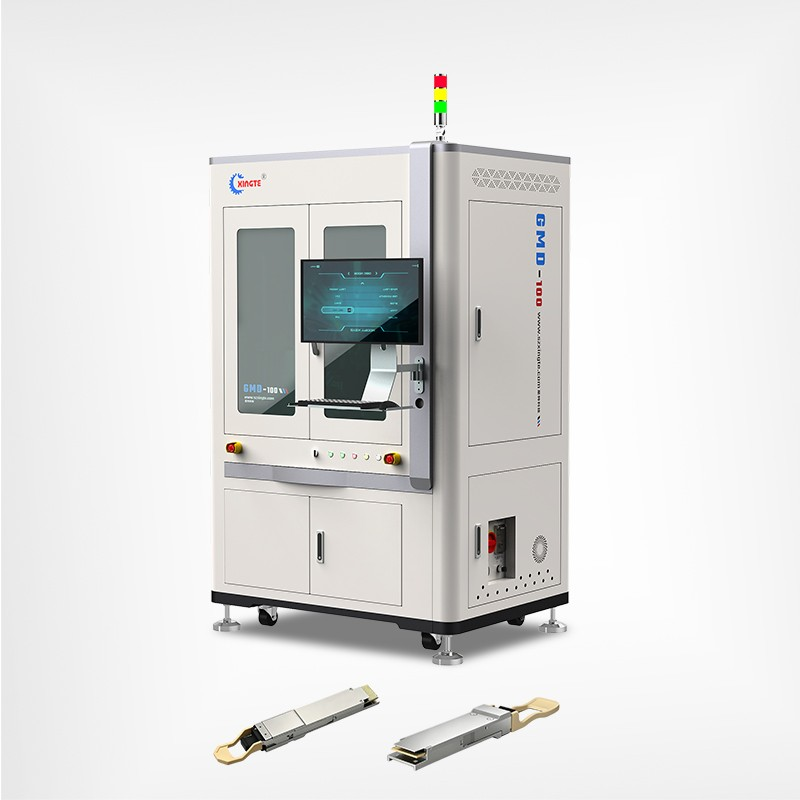
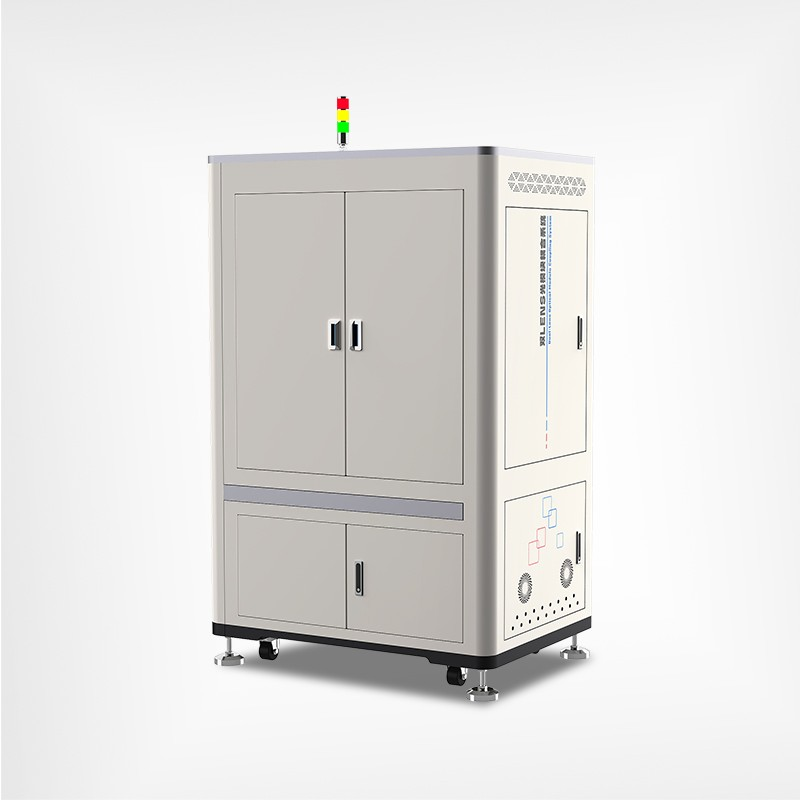
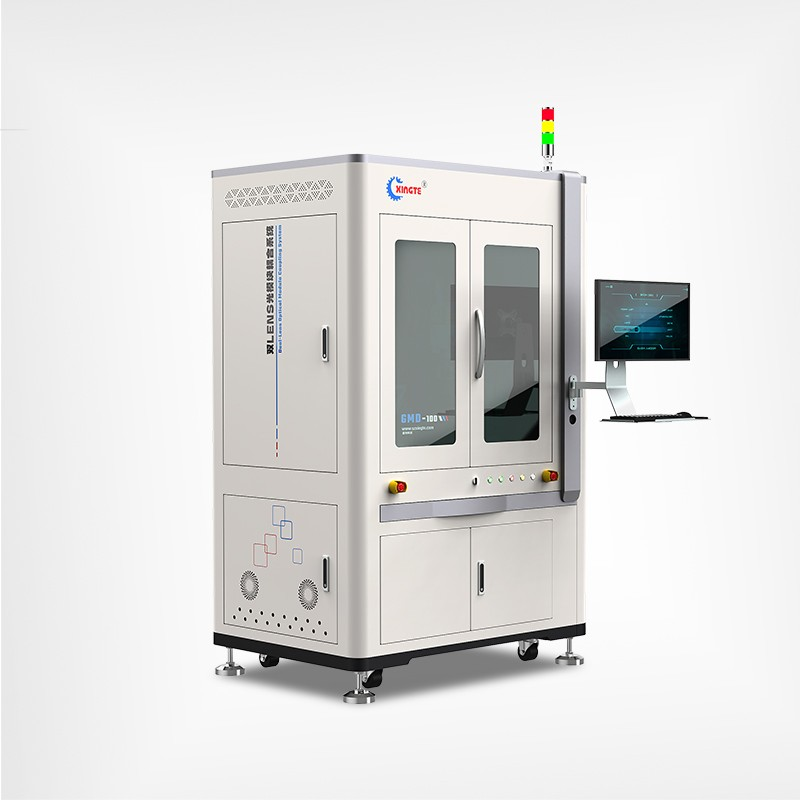
4. XINGTE GMD-100 process practice. XINGTE’s GMD-100 Dual-Lens automatic coupler, through ±50nm precision motion control and self-developed mature coupling algorithm optimization, automatically completes six-dimensional alignment with high accuracy and good repeatability. Its integrated platform supports both Dual-Lens and Dual-FA mainstream coupling processes simultaneously, both of which have achieved mature mass-production implementation, adapting to the industry’s parallel development of multiple technical routes. Single-station efficiency can reach several times that of manual methods, making it the inevitable choice for high-speed optical module mass-production upgrades.
Beyond accuracy, efficiency and personnel, automatic coupling equipment also matters greatly to the long-term competitiveness of optical module manufacturers. With the explosive growth of AI computing power and data-center high-speed interconnection demand, optical modules are accelerating toward higher rates and higher integration, and companies’ requirements for automation and intelligence are rising. Companies that complete coupling automation first not only gain yield and efficiency advantages now, but also accumulate technology and management experience for future new-product introduction and capacity expansion.
Therefore, choosing forward-looking and expandable automatic coupling equipment is essentially investing in the long-term development of the company. The extreme requirements of high-speed optical module packaging on accuracy, efficiency and stability determine that automatic coupling equipment must be adopted; choosing automatic coupling equipment with nanometer-level accuracy, dual-process compatibility and mature mass-production validation is the key support for optical module manufacturers to achieve efficient, high-quality mass-production upgrades and stay ahead in a rapidly changing market.